Taking a motorhome on the road means the freedom to change scenery every day. But where are you allowed to stop for the night? On a car park, on a lay-by, at a campsite? The rules are simpler than you might think, provided you make a clear distinction between two things: parking and camping. Here's what you need to know before your first trip.
Your driving licence: check your registration document
With a category B licence, you can drive a motorhome with a maximum authorised mass (MAM) of no more than 3.5 tonnes. This figure appears on your registration document, in box F.2. Beyond that, you will in principle need a category C1 licence, except in the special case of category B licences obtained before 20 January 1975. If you're hiring a vehicle, check this with the hire company before booking, especially for large family models.
Parking or camping: the difference that changes everything
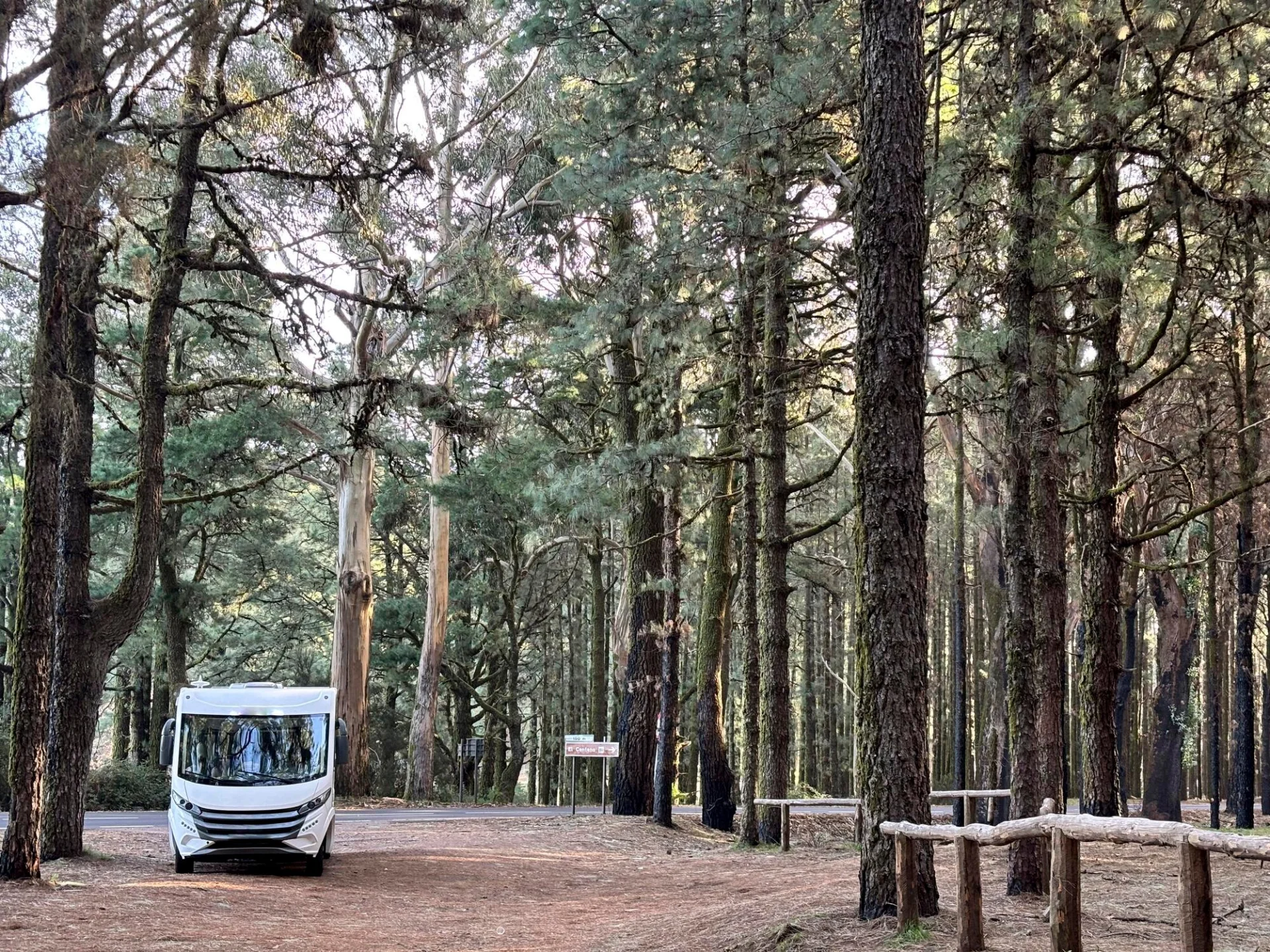
According to the Highway Code, a motorhome is a vehicle like any other. It can park anywhere a car can, day or night, and sleeping inside makes no difference. Parking becomes excessive after seven days in the same location, or less if a local council order stipulates otherwise.
However, as soon as you settle in, you're no longer parking: you're camping. Putting out stabiliser legs, deploying an awning, placing a table and chairs outside – that's camping. And camping on public land is not permitted. On a car park or in a street, the vehicle must therefore remain "closed": nothing protruding beyond its outline.
What the mayor can prohibit
A mayor can restrict parking with a reasoned order, for public peace or protection of a natural site. Signs, height barriers at the entrance to car parks or a maximum duration indicate these rules. Respect them: fines for excessive or obstructive parking do exist. And on private land, you must always have the owner's permission.
If you dream of nights in the heart of nature, the rules are similar to those for tents: we detail them in our article on wild camping and bivouacking.
Service areas, stopover areas or campsites: three solutions
- The service area: a point for topping up with fresh water and emptying grey water and toilets. You stop there for maintenance time, not necessarily to sleep. Never empty your waste water anywhere other than in these facilities.
- The stopover area (or parking area): a car park reserved for motorhomes, free or paid, often for a limited duration set by the local authority. Practical for a stopover, but you can't camp there any more than elsewhere.
- The campsite: the only solution for really settling in, with awning, table and chairs, an electrical connection, facilities and often a service point. It's also the most relaxing option for a stay of several days.
Choosing your campsite for motorhoming
Not all campsites welcome large vehicles on the same terms. Before booking, check these points:
- The size of pitches and access: narrow lanes, low trees or slopes can make manoeuvring a large model difficult.
- Electrical connection and available amperage, if you're relying on electric heating or cooking.
- A service area on site, to avoid a detour on departure day.
- Opening dates, especially out of season.
Several campsites listed on Cmoncamping indicate a motorhome service area and year-round opening according to their details, such as camping de Trémelin in Ille-et-Vilaine, camping Les 7 Laux in Isère or camping Le Pré des Moines in Oise. camping de Tournus, in Saône-et-Loire, also has a service area. Always confirm dates and conditions directly with the campsite.
Finding a campsite on your route
The campsite map is the most practical tool for motorhoming: it allows you to spot possible stopovers along your route. You can also browse the list of campsites by department.