A well-chosen tent means dry nights and a hassle-free stay. A poorly chosen tent means water trickling onto your sleeping bag at the first downpour, or two hours of pitching whilst your neighbours watch. Before you buy, here are the key points to consider, depending on how you camp.
1. Capacity: go one size up
The stated capacity usually corresponds to the number of people lying side by side, with little spare room or space for bags. For a multi-day camping trip, choose a tent with one more sleeping place than the number of sleepers. Also check the bedroom dimensions (length and width) rather than just the figure on the box, especially if you sleep on wide mattresses.
2. Waterproofing: the Schmerber rating
The waterproofing of a fabric is measured in millimetres: this is the height of water column it can withstand before letting water through, according to ISO 811 standard. This is called the Schmerber rating. For the flysheet of a tent, you'll commonly find values between 3,000 and 5,000 mm. The groundsheet, which bears your body weight, often shows 10,000 mm or more. Also check whether the seams are sealed (heat-welded or coated): water often gets in there.
3. The flysheet: the best protection against condensation
Most camping tents have a flysheet: a breathable inner chamber and a waterproof outer fabric, separated by an air gap. Condensation forms on the outer fabric and doesn't drip onto you. For this to work properly, the two fabrics must not touch: pull the guy ropes tight.
4. Materials: polyester, cotton or polycotton
- Polyester: lightweight, cheap, dries quickly. It heats up fast in the sun and condensation is more noticeable.
- Cotton or polycotton: heavier and more expensive, but breathes better, keeps cool in summer and reduces condensation. It must be dried before storage, otherwise it will go mouldy.
For a long stay in one place in peak summer, polycotton is comfortable. For frequent moves or cycling trips, polyester wins thanks to its weight.
5. Pitching: try it before you leave
Dome tent, tunnel tent, inflatable tent with air tubes or pop-up tent: each system has its advantages. Inflatable tents pitch quickly but take up space in the boot; pop-up tents are convenient but difficult to pack away and not well suited to windy conditions. Whatever the model, pitch it once in your garden or a local park before you go: you'll know if any parts are missing and how long to allow.
6. Ventilation and living comfort
Look at the number of high-level vents, mosquito nets on the doors and the presence of a canopy or covered living area for eating under cover. Two doors mean you won't have to step over your neighbour at night. For families, a tent with several separate bedrooms divided by a living area is the most comfortable option. A blackout lining (often called a "dark" or "black" bedroom) helps children sleep when the sun rises early.
7. Weight and packed size
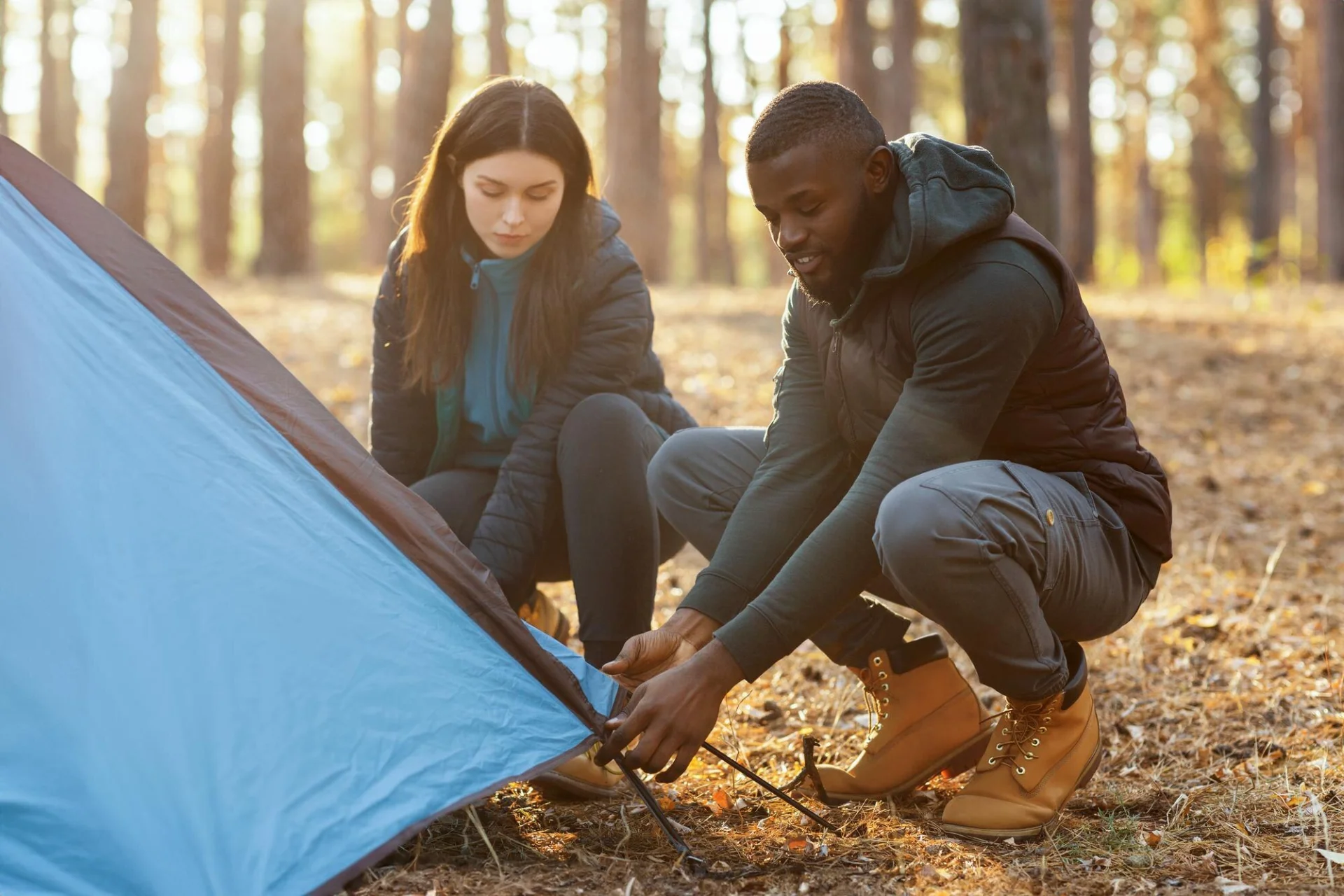
When camping with a car, weight matters little, but boot space does. On foot, by bike or motorbike, every kilo counts: compare the weight shown on the manufacturer's specification sheet, which ranges from a few kilos for a backpacking tent to much more for a large family tent. To pitch the tent without difficulty, get some sturdier pegs than those supplied, suitable for hard or sandy ground.
Which tent for whom?
- Couple travelling: lightweight dome or tunnel tent, 3-person capacity, flysheet, quick to pitch.
- Family on a one or two-week stay: tunnel or inflatable tent with separate bedrooms, with living area, in polyester or polycotton.
- Backpacker and wild camping: lightweight and compact tent, pitches in minutes (and only to be erected where permitted, see our article on wild camping and bivouacking).
Not quite ready to buy?
Many campsites offer ready-pitched and equipped tents, a good way to try canvas living without investing. This is the case for example at camping Le Capeyrou in Beynac-et-Cazenac or camping Au Gré des Vents in Rochefort-en-Terre. If you already have your own tent, look for shaded pitches, such as at camping Les Pastourels in Dordogne. And for staying warm outside the season, revisit our tips for autumn camping.
To find your next pitch, open the campsite map or browse the list of campsites.