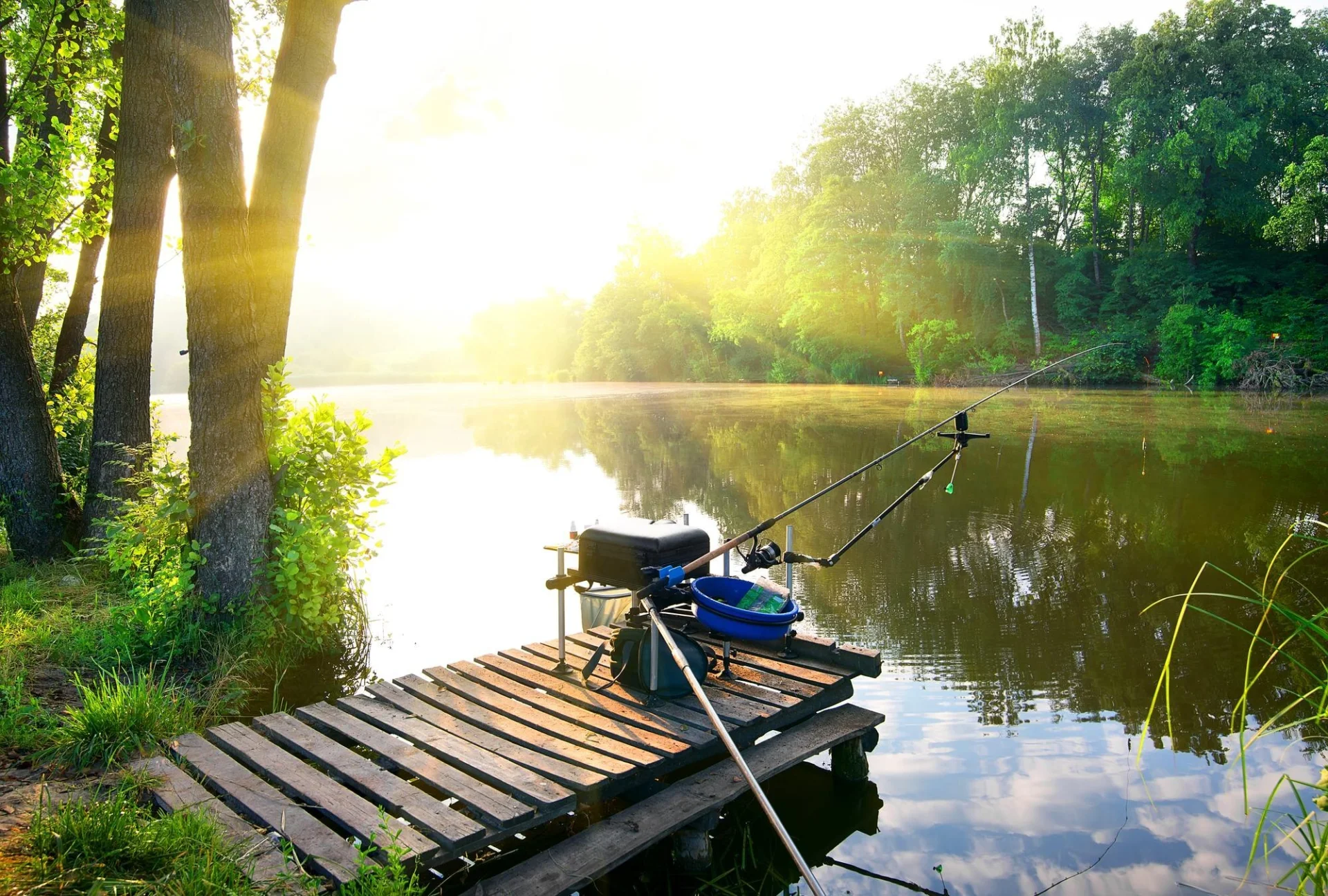
A line in the water at daybreak, the campsite still asleep: fishing is one of the simple pleasures of a holiday in the great outdoors. Before casting your line, there are a few rules to know, as fishing in a river or lake without permission can result in a fine. Here's what you need to know to fish peacefully during your break.
The fishing licence: compulsory in rivers and public lakes
To fish in fresh water on public land (rivers, streams, most lakes), you need a fishing licence. It can be purchased online on the official website cartedepeche.fr or from an approved fishing association (AAPPMA) and its retailers, often a fishing shop, tourist office or sometimes the reception desk of a campsite.
Several options are available, useful for a holiday stay:
- The daily licence: for one day of fishing, the simplest option if you fish occasionally.
- The weekly licence: valid for 7 consecutive days, designed for holidaymakers.
- The women's discovery licence: a discounted annual pass for adult women.
- The under-12s discovery licence: a very affordable rate to introduce children to fishing.
- The annual licence: for those who fish all year round.
Prices vary depending on the type of licence and the departmental federation: check the exact price when purchasing. Keep your licence with you, on paper or on your phone, in case of inspection.
First or second category: what changes
Waterways and bodies of water are classified into two categories. The first category mainly includes trout waters (cool rivers, often in mountainous areas or at the head of a basin). The second category covers other waters, where you'll find mostly roach, carp, pike or zander.
The category changes a lot of things: opening periods, number of lines allowed (generally more limited in the first category), minimum fish sizes and catch limits. These rules are set each year by prefectural order and vary from one department to another. Before fishing, consult the guide from the fishing federation of the department where you're staying, often available online or at the point of sale for licences.
The campsite pond: often the simplest option
Many campsites have a pond on site, ideal for fishing with the family without taking the car. These private ponds have their own rules: some are accessible without a fishing licence, others require a ticket or insist on returning fish to the water. Check at reception when you arrive.
In Dordogne, the Camping Le Lieu in Saint-Jory-de-Chalais has a fishing pond without a permit with perch, carp and tench. Near Sarlat, the Camping La Roussie, a farm campsite, also has a private pond without a permit. The Val de la Marquise in Campagne offers a private 2,500 m² pond accessible free of charge, and the Domaine de l'Étang de Bazange near Bergerac is set around a 2-hectare pond. Other addresses can be found among the campsites in Dordogne.
In Brittany, the Camping de Loperhet in Plouharnel, between Carnac and Erdeven, has a 9-hectare fishing pond, 1.5 km from the beaches.
Basic equipment to get started
- A simple, versatile rod with a reel is enough to begin fishing in a pond.
- Line, a few hooks, floats and weights suited to your needs.
- Bait: maggots, worms or sweetcorn, depending on the fish you're after and the rules of the location.
- A landing net and a disgorger to remove the hook without damaging the fish.
- A bucket or fish trap if you keep your catch, when permitted.
If you release the fish, wet your hands first and put it back in the water quickly.
Good habits by the water
- The best times are often early morning and late afternoon, when the water is calmer.
- Keep a close eye on children near the water, and use a life jacket for younger children on a steep bank.
- Keep your distance from other anglers and don't walk through crops to reach the bank.
- Take away any line and packaging: abandoned line can trap birds.
- Respect marked no-fishing zones (reserves, spawning grounds, areas near dams).
To find a campsite on the edge of a lake or river, search on the campsite map.