A hot coffee when you wake up, pasta in the evening after a hike: the camping stove is one of those items that really changes life when camping. But with trekking models, double burners for families, cartridges you pierce or screw on, and "4-season" gases, it's easy to make a mistake. Here are the key points to consider before buying, without focusing on any particular brand or model.
What type of stove, for whom?
- The trekking gas stove: a small burner that screws onto a cartridge. Lightweight and quick, it suits hikers, cyclists and those doing stage routes. For whom: one or two people, simple meals.
- The "table" gas stove, with one or two burners, often in a case: more stable, it accepts large pans. For whom: families staying several days at the same pitch, in a tent, caravan or van.
- The alcohol stove: simple, silent, with no moving parts. It heats more slowly and its flame is hard to see in daylight. For whom: those looking for a very lightweight item with no maintenance.
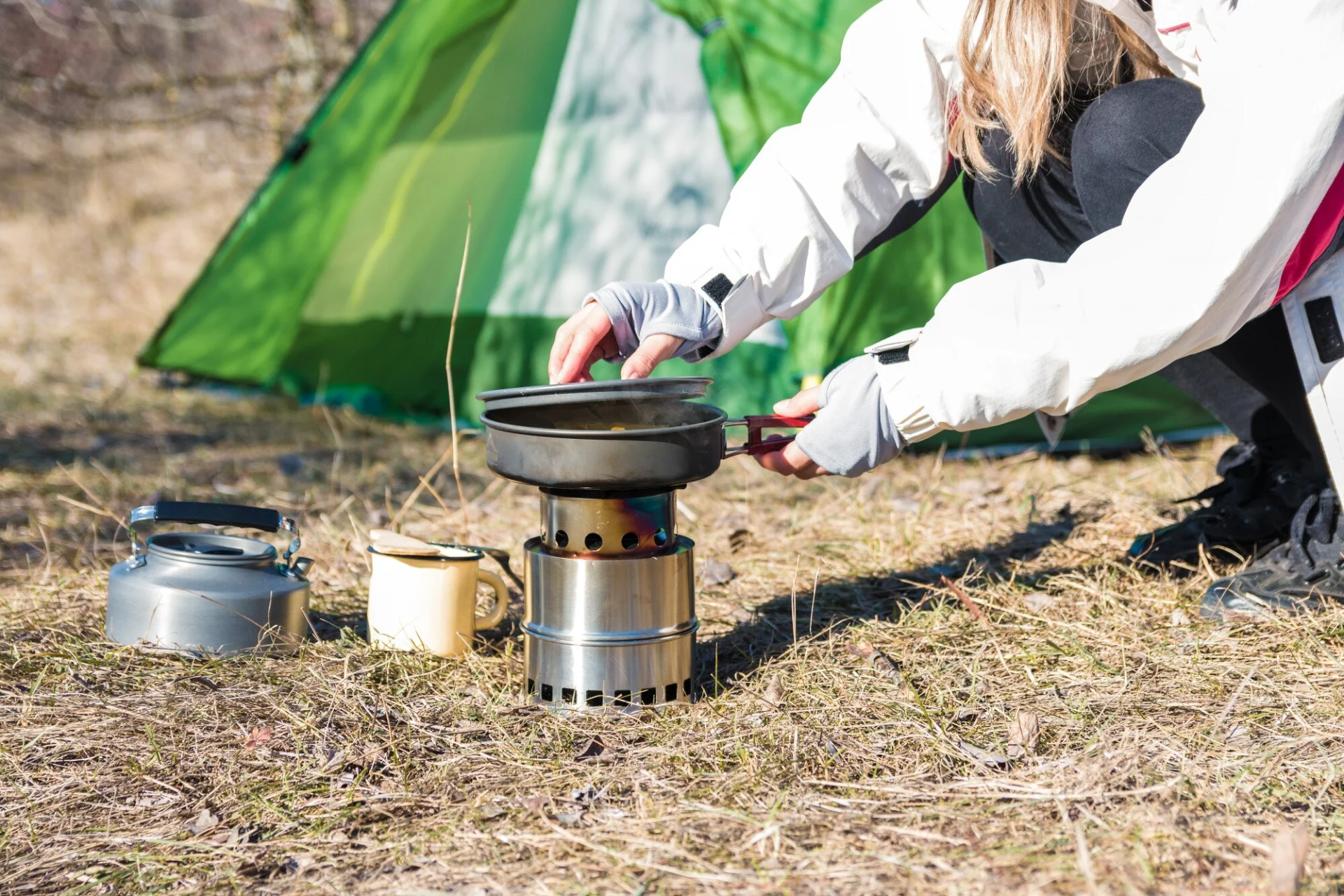
- The wood stove (like in the photo): it burns twigs collected on site. No fuel to carry, but it depends on the weather and what you find. Before lighting it, check that the campsite allows it and that there are no fire bans in place, especially in summer in the South.
Piercing or screw-on cartridge
This is the first thing to check, as the two systems don't mix.
- Screw-on cartridges have a threaded valve: you can remove them from the stove without losing gas. Many comply with the European standard EN 417, which regulates non-refillable gas cartridges for portable appliances.
- Piercing cartridges are pierced by the stove when assembling: once in place, they must not be removed until they're empty.
A stove designed for one system won't work with the other, and some manufacturers use their own connector. The right approach: check the stove's manual and only use the cartridges it specifies. Also make sure they're easy to find where you're going.
Which gas for which season
Not all cartridges perform the same way when it's cold, as the gas must change from liquid to gaseous state to burn:
- Butane vaporises poorly around 0°C: perfect in summer, it quickly loses power on a cool night.
- Isobutane performs well down to around -10°C.
- Propane works even in extreme cold, but it requires thicker bottles: it's mainly found in blends.
Cartridges sold as "4-season" or "winter" mix these gases to better withstand the cold. For autumn camping or in the mountains, like at Domaine de l'Oursière in Villard-de-Lans or camping d'Autun in Saint-Lary-Soulan, this is the safest choice. Tip: keep the cartridge warm (in your sleeping bag or a pocket) before cooking.
Other points to consider
- Stability: a small burner sitting on a cartridge is tall and fragile. A tripod or model with a tube, where the cartridge sits to the side, is safer with a large pan.
- Windscreen: wind causes significant heat and gas loss. Some stoves have one built in, otherwise you can add one (without ever enclosing the cartridge, which could overheat).
- Ignition: piezo ignition is convenient, but sometimes fails. Always keep a lighter or matches handy.
- Flame control: boiling water requires something different from simmering. Good control prevents burning the bottom of the pan.
- Compactness: some stoves pack away inside their pan, saving space in your bag or boot.
Safety first
- Never use a stove inside the tent, in a closed awning, or in a vehicle, even to keep warm. Any combustion appliance produces carbon monoxide, an invisible, odourless gas that can be fatal during sleep. Headaches, nausea or unusual drowsiness: go outside into fresh air and call 15 or 112.
- Cook outdoors, on stable ground, away from canvas and dry grass.
- Attach and detach cartridges away from any flame, and check the seal.
- Never leave a stove burning unattended, and don't leave cartridges in direct sun in the height of summer.
- Follow the campsite rules: some ban fires and barbecues on the ground depending on the season.
For what comes next, our advice on storing your camping equipment for winter also applies to the stove (cartridges stored dry, away from heat). And if you're travelling on a route, review the rules for wild camping and bivouacking. To find a pitch, browse the map or all our campsites, like camping La Cascade in Meyrueis, at the foot of the Cévennes.