Cycle along the ocean and pitch your tent at a new campsite each evening: this is what La Vélodyssée offers, the cycle route along the Atlantic coast. Whether you're planning a few days on a single section or the entire route, here's how to organise it with campsites.
La Vélodyssée in brief
- It's the French section of EuroVelo 1, the Atlantic coast cycle route.
- It connects Roscoff, in Finistère, to Hendaye, on the Spanish border, covering approximately 1,300 km.
- It passes through three regions (Bretagne, Pays de la Loire, Nouvelle-Aquitaine) and nine departments.
- The route is signposted from north to south, and most of it runs on traffic-free roads (greenways, cycle paths).
Choosing your section
No need to do it all at once. Many cyclists choose a section lasting a few days depending on the scenery they prefer:
- Northern Bretagne: starting from Roscoff, countryside, Nantes to Brest canal and minor roads.
- The islands and Charente marshes: flat paths, oyster farming villages, bridges to the islands.
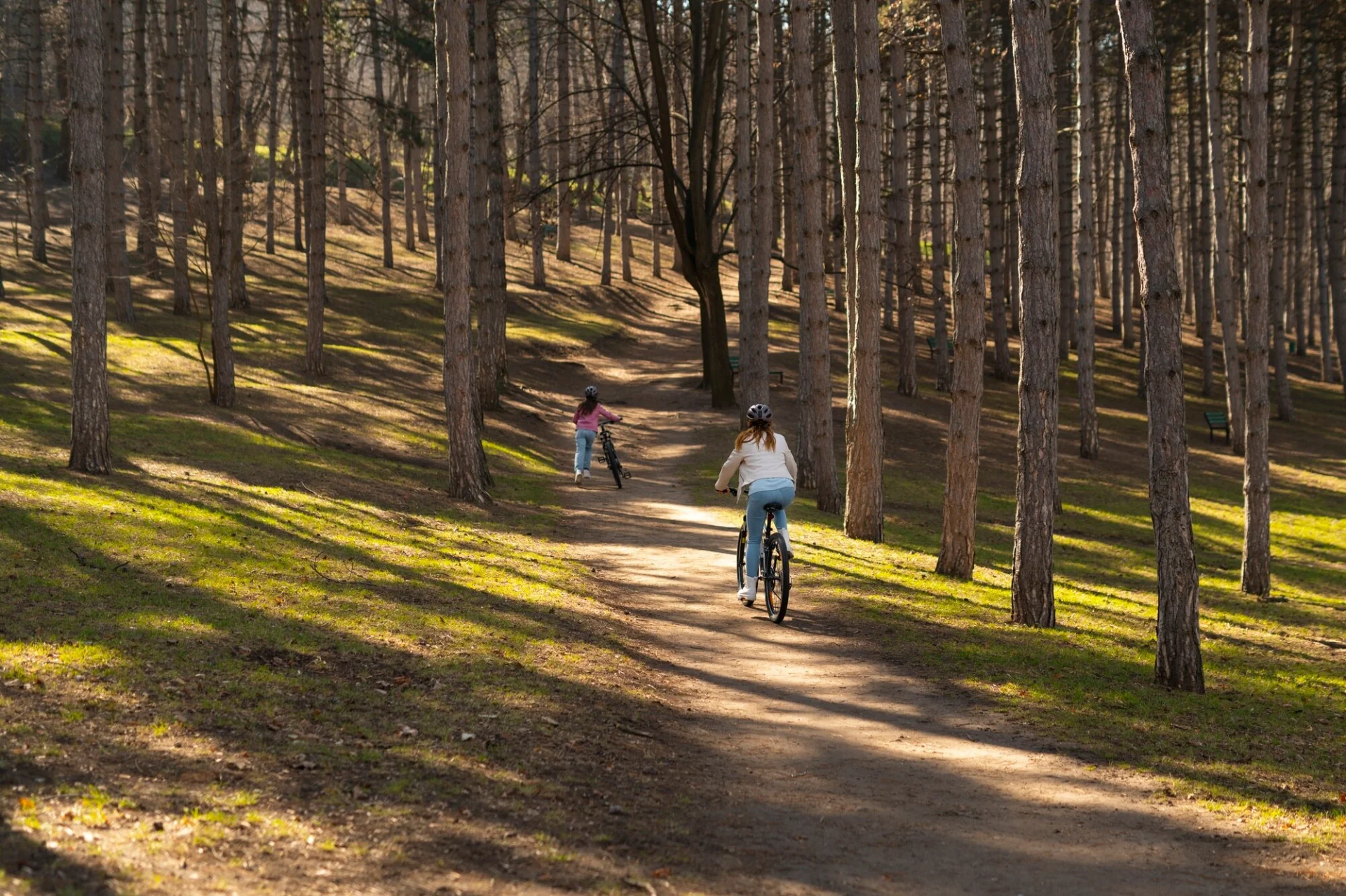
- Gironde and the Landes: long paths through the pine forest, just minutes from beaches and lakes. This is the easiest section for a first family trip.
- Pays Basque: the end of the route, more undulating, as far as Hendaye.
To locate campsites along the coast, the campsite map is most convenient: you can see at a glance which ones are close to your stage.
Organising your stages with campsites
- Stages at your own pace: plan short days at first, especially with children or a laden bike, and keep a half-day free for swimming or sightseeing.
- Booking or not: out of season, you can often find a spot by just turning up. In July and August, it's better to book at least the day before, checking whether the campsite welcomes cyclists for just one night.
- The Accueil Vélo label: it indicates accommodation located within 5 km of a cycle route, with secure bike storage and a repair kit. It's a good reference point when travelling with your equipment.
- Useful services: shops or bread delivery, laundry facilities, and bike rental or repairs on site if you don't come with your own.
Equipment to bring
- Waterproof panniers rather than a rucksack: keeps your back free and the weight lower.
- A lightweight tent that's quick to pitch, with a sturdy double roof to withstand ocean winds. Our article on what to look for when choosing your tent will help.
- A repair kit: inner tube or patches, tyre levers, pump and small multi-tool.
- A lock, sunscreen, a windproof jacket and something to drink: some forest sections are long with no villages in sight.
Getting there and leaving by train
Train is the easiest way to reach the start or return home after a section. The rules for taking your bike on board vary by region and line: on some regional trains, bike spaces are free, on others you need to reserve. Check on the TER website for the region concerned before you leave, and avoid tandem bikes and trailers, which are often refused on board.
A few campsites along the route
These campsites indicate on their page that they are located on La Vélodyssée or nearby:
- At the start, near Roscoff: camping Kerlaudy, in Plouénan, along the greenway.
- On the île d'Oléron: camping Le Montet d'Oléron, in Dolus-d'Oléron, with the cycle path in front of the entrance and bike rental.
- In Gironde: camping Les Jardins du Littoral, in Lacanau, with the Accueil Vélo label. Also see all campsites in Gironde.
- In the Landes: camping Las Chancas, in Sainte-Eulalie-en-Born, in the heart of the Landes forest. Also see all campsites in the Landes.
Before booking, confirm with the campsite its opening dates and conditions for a single night.