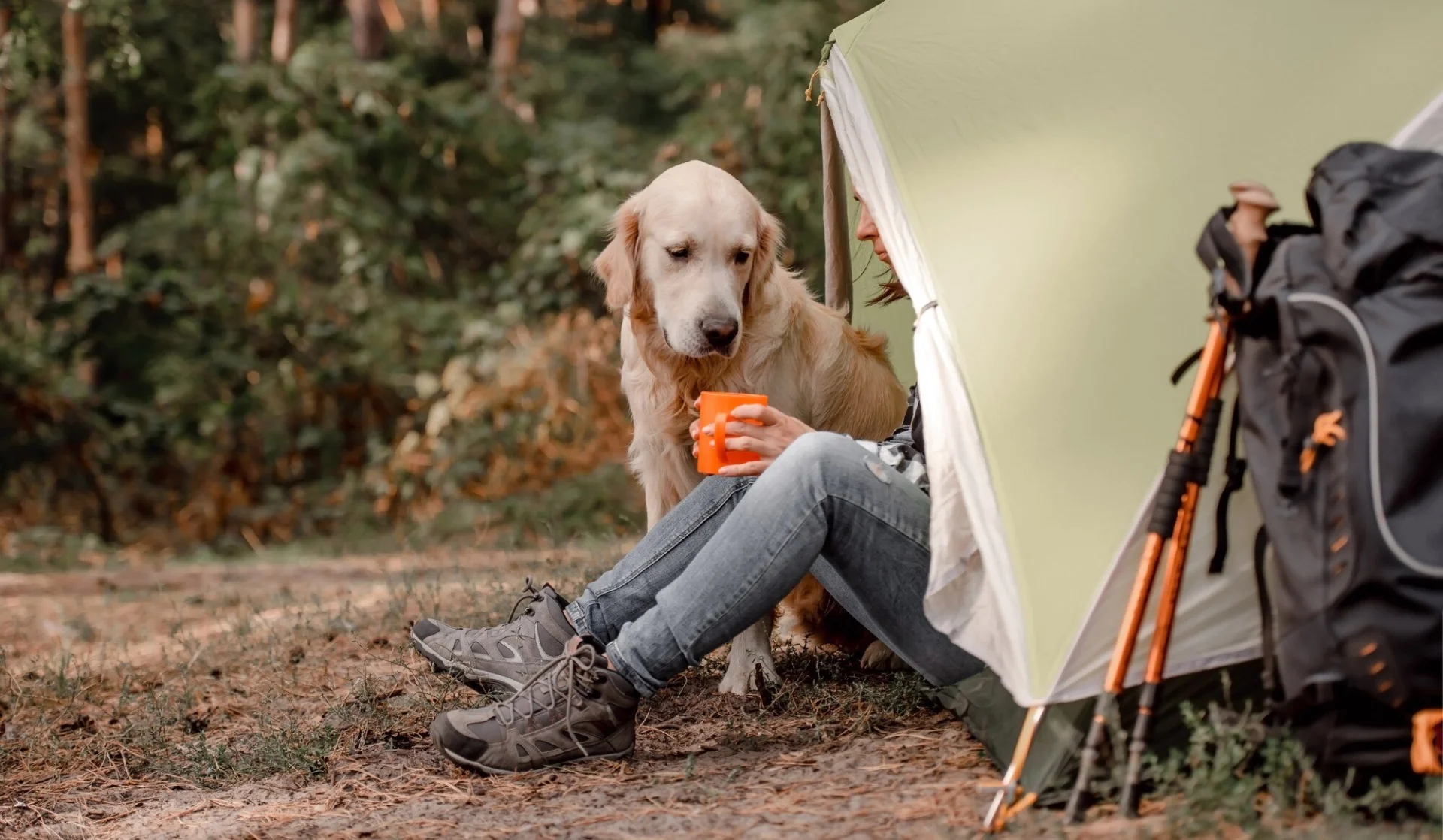
Going camping with your dog means keeping the whole family together and enjoying nature at your own pace. You just need to choose a campsite that accepts dogs, have the right paperwork and remember a few simple rules on site. Here's what you need to prepare before hitting the road.
1. Check that the campsite accepts dogs
Each campsite sets its own rules in its terms and conditions. Many accept dogs, often for an additional nightly fee, but some refuse them in accommodation (mobile homes, chalets) and only accept them on pitches without facilities. Others limit the number or size of animals.
- Look for the "Pets accepted" pictogram on the campsite information sheet, then confirm directly with the campsite when booking.
- Ask whether your dog is accepted in your chosen accommodation, if there is an additional charge and whether it can be left alone for a few hours.
- Dogs of the 1st and 2nd category are often refused by campsites: check before booking.
To save time, the all campsites page and the campsite map allow you to identify establishments in your future destination before checking the conditions on each information sheet.
2. Paperwork to bring
In France, dog identification is compulsory (microchip or tattoo). Keep its identification card and health record with you.
- Rabies vaccination: it is not compulsory for travelling in France, but a campsite may require it. It becomes compulsory for dogs of the 1st and 2nd category and for crossing a border.
- Stay in another European Union country: the dog must be at least 15 weeks old, identified by microchip, have a European passport issued by a vet and valid rabies vaccination, carried out at least 21 days before departure.
- Dogs of the 1st and 2nd category: they must be kept on a lead and muzzled in public places. The ownership permit and civil liability insurance certificate must be kept with you.
3. Campsite rules
A campsite is a shared space with children, other animals and close neighbours. A few rules appear in almost every campsite's terms and conditions:
- the dog must be kept on a lead in the paths and common areas;
- it is not allowed in the facilities, at the swimming pool or in the play area;
- it must do its business outside the campsite or in a designated area, and waste must always be cleared up;
- avoid leaving it alone if it barks or if it may become stressed.
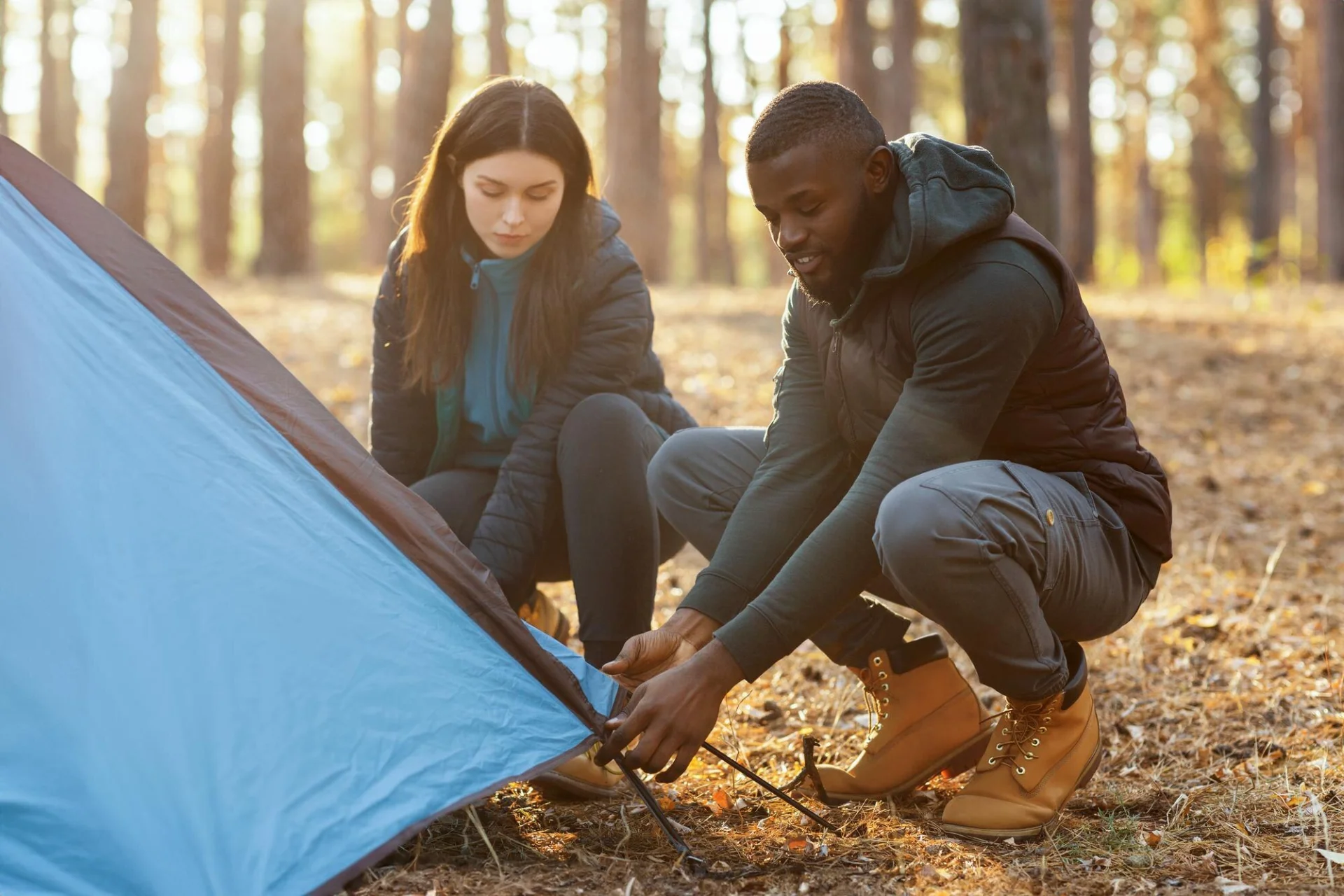
Bring a peg or tethering cable for your pitch, its food bowl, blanket or bed, and a towel to dry it after rain or a swim. If you're sleeping under canvas, choose a model with a canopy or a large enough entrance: our article on things to look for when choosing your tent will help you.
4. Beaches, national parks: where dogs are restricted
Before planning an outing, check the local rules:
- Beaches: many coastal authorities prohibit dogs on beaches during the season by municipal order. Some reserve beaches where dogs are allowed. The easiest thing to do is to ask at the campsite reception or the tourist office.
- The heart of national parks: in the heart of the Écrins national park, for example, dogs are forbidden, even on a lead, so as not to disturb wildlife and herds. Outside the heart of the park, they are accepted on a lead.
- Wild camping: the rules vary depending on the location, as we explain in our article on wild camping and bivouacking in France.
5. Heat, ticks and safety
- Never leave your dog in a car or closed tent in the sun: the temperature rises very quickly.
- Keep fresh water within reach and place it in the shade during hot hours.
- Discuss protection against ticks and fleas with your vet before departure, and check its coat after each walk.
- Note the number of a vet near the campsite as soon as you arrive.
A few destination ideas
In the mountains, the campsites in Hautes-Alpes offer lovely walks around Serre-Ponçon lake. The camping de la Clapière, in Embrun, and the camping Les Eaux Douces, in Valgaudemar, indicate on their information sheet that they accept animals. For the latter, located in the Écrins national park, make sure you identify the boundaries of the park's heart before going hiking with your dog.
By the sea, the campsites in Finistère allow for long walks along the coastal paths. The camping de la Torche, in Plomeur, also indicates that it accepts animals. In any case, confirm the conditions directly with the campsite before booking.